Subscribe For Free Updates!

We'll not spam mate! We promise.

Facebook Like

eBooks Search


Tip: Include the term ReadAloud in the search box if you only want titles that can be read aloud.

How It Works Book of 101 Amazing Facts You Need To Know 2014

Have you ever wondered why we sneeze? How about how pearls are formed? If you want to know more about the world we live in, you’ve come to the right place. This book contains facts from six subject areas: the environment, technology, science, space, transport and history – and each section is packed with questions and answers that will feed even the hungriest of minds. Featuring: Environment – Find out why the coast is eroding and how seahorses reproduce. Technology – Learn about fracking and roller coasters. Space – Discover who can lay claim to the moon and what’s inside our Sun. Transport – See what makes planes fly and how it’s possible to drift.


How It Works Book of 101 Amazing Facts You Need To Know 2014-P2P
English | 148 pages | True PDF | 20.00 MB
Download: Uploaded | FileFactory | DepositFiles | MediaFire

Science – 14 February 2014

Offering news, analysis, and pioneering original research, Science is your source for information on the latest developments in the scientific community.

Release name: Science – 14 February 2014-P2P
Size: 40MB
Format: PDF
Pages: 118 pages
LinkHomepage

DownloadUPLOADED.net

The Existence of God

Zealot

#1 NEW YORK TIMES BESTSELLER

From the internationally bestselling author of No god but God comes a fascinating, provocative, and meticulously researched biography that challenges long-held assumptions about the man we know as Jesus of Nazareth.

Two thousand years ago, an itinerant Jewish preacher and miracle worker walked across the Galilee, gathering followers to establish what he called the “Kingdom of God.” The revolutionary movement he launched was so threatening to the established order that he was captured, tortured, and executed as a state criminal.

Within decades after his shameful death, his followers would call him God.

Mark Twain's Christian Science


Though Mark Twain is best remembered as perhaps the 

quintessential American humor writer, he was also a keen 

observer and critic of cultural and social trends. In this vein, 

he undertook a book-length discussion and analysis of 


Christian Science and New Thought, both of which enjoyed 

immense popularity in the nineteenth and early twentieth 

centuries in the United States. The controversial text was 

originally rejected by Twain's publisher, a gesture that the 

author saw as confirming the influence and power of the 

religious movement   More...

Rewire Your Brain: Think Your Way to a Better Life

Highly recommended in self help literature:


Rewire Your Brain: Think Your Way to a Better Life


By: Arden, John B.
Published By: John Wiley & Sons, Inc.

How to rewire your brain to improve virtually every aspect of your life-based on the latest research in neuroscience and psychology on neuroplasticity and evidence-based practices.
Not long ago, it was thought that the brain you were born with was the brain you would die with, and that the brain cells you had at birth were the most you would ever possess. It turns out that's not true. Your brain is not hardwired, it's "softwired" by experience.
This book shows you how you can rewire parts of the brain to feel more positive about your life, remain calm during stressful times, and improve your social relationships. You will also learn to improve your memory, boost your mood, have better relationships, and get a good night sleep.
$15.95

Mystery: An Alex Delaware Novel

Mystery: An Alex Delaware Novel

King's Speech
By: Kellerman, Jonathan
Published By: Random House Publishing Group
ePub for Digital Editions : $28.00
iPhone / iPad: $28.00


Few know the city of Los Angeles the way #1 bestselling author and acclaimed suspense master Jonathan Kellerman does. His thrilling novels of psychological drama and criminal detection make the capital of dreams a living, breathing character in all its glamour and infamy. That storied history of fame, seduction, scandal, and murder looms large in Mystery, as Alex Delaware finds himself drawn into a twisting, shadowy whodunit that’s pure L.A. noir—and vintage Kellerman.

The closing of their favorite romantic rendezvous, the Fauborg Hotel in Beverly Hills, is a sad occasion for longtime patrons Alex Delaware and Robin Castagna. And gathering one last time with their fellow faithful habitués for cocktails in the gracious old venue makes for a bittersweet evening. But even more poignant is a striking young woman—alone and enigmatic among the revelers—waiting in vain in elegant attire and dark glasses that do nothing to conceal her melancholy. Alex can’t help wondering what her story is, and whether she’s connected to the silent, black-suited bodyguard lingering outside the hotel.

Two days later, Alex has even more to contemplate when police detective Milo Sturgis comes seeking his psychologist comrade’s insights about a grisly homicide. To Alex’s shock, the brutalized victim is the same beautiful woman whose lonely hours sipping champagne at the Fauborg may have been her last.

But with a mutilated body and no DNA match, she remains as mysterious in death as she seemed in life. And even when a tipster’s sordid revelation finally cracks the case open, the dark secrets that spill out could make Alex and Milo’s best efforts to close this horrific crime not just impossible but fatal.

Dealing with Difficult People

Dealing with Difficult People


Dealing with Difficult People

By: Brinkman, Dr. Rick; Kirschner, Dr. Rick
Published By: McGraw-Hill
These quick reads, based on McGraw-Hill bestsellers, are designed to meet the needs of busy people. Titles in the series focus on each book's main themes and action ideas, reduced to a manageable page count for on-the-go readers.
Specific strategies for understanding the 10 types of problem people and influencing them to adopt positive behaviors.
ePub for Digital Editions : $7.95
iPhone / iPad: $7.95
PDF for Digital Editions : $7.95
Microsoft Reader: $7.95

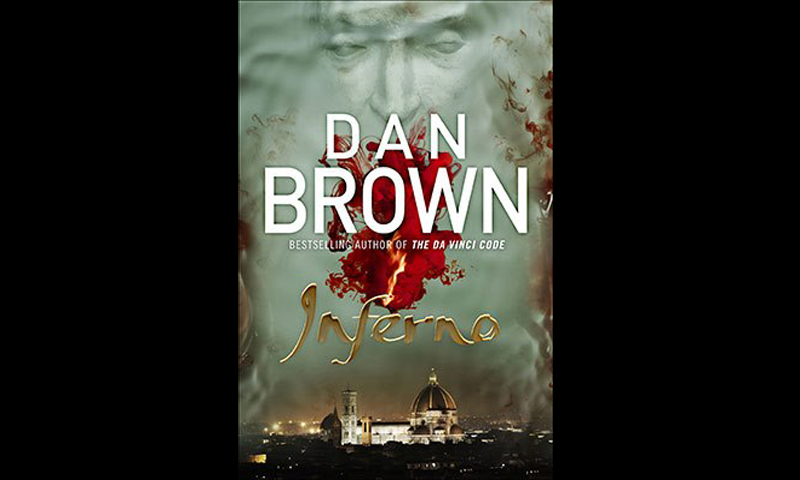
Review of Dan Brown's Inferno


Midway through this infernally boring novel, Dan Brown finally pulls a fast one on the reader, and the story picks up. But by that time it is too little, too late.

Inferno does not live up to the standard set by the first two novels in the Robert Langdon series, which began with Angels and Demons. As a thriller, it is hard to top the bestselling The Da Vinci Code for both plot and sales. Meanwhile, The Lost Symbolread like an elaborate apology for the amount of damage Brown dealt to the Freemasons' image. Inferno takes a completely tangential route, and deals within the frameworks of another classical narrative, and completely misses the goals of a thriller: to keep the reader insatiably flipping pages.
If it weren't for the overt and blatantly artless connections made between the two texts, Dan Brown's Inferno, and Dante Alighieri's Inferno, there would be little point to Dan Brown's novel at all. But then, the critic's job is not to heavily penalise the writer for writing in a particular genre. It is just infuriating to read a work that is not neatly filed into a specific shelf of the library. For a thriller, the book is too prosaic in the first half; and if it is contending to be a literary work it contains outrageously atrocious language - the river has "churning waters" and there is a "sea of corpses" at the feet of "a veiled woman". The bodies are "writhing in agony" and Langdon can "hear the mournful cries of human suffering echoing across the water." That is just the first page.
The story runs thus: Langdon wakes up in a hospital with a splitting headache. He is suffering from amnesia, ala Jason Bourne. But unlike Ludlum's hero, Langdon is not confused about whether he is on the right side. Of course he's the hero. He's the Harvard professor with the tweed jacket and Mickey Mouse watch, after all. Can't have Disney playing for the wrong team! He is saved by a doctor from an assassin, and then the adventure and the puzzle-solving begins. As do the touristy and historically informative set of discussions between the two characters, as they travel across Italy and Europe.
For anybody unfamiliar with The Da Vinci Code, puzzles in the Langdon series are often shared with readers, though obscure enough to not be solvable except through contrivances and coincidences in the narrative. Ditto for Inferno.
The puzzles are centered around the theory and actions of Bertrand Zobrist, a tortured genius geneticist. As with previous villains, this one is also an egoist, and he also leaves plenty of clues for Langdon to decipher. Zobrist believes that the Earth is nearing Doomsday population, when the resources will finally run out and people will begin to behave like the plagued and mad masses from Dante's version of hell in Inferno. With references to this well-known and incredibly visual text, Brown then ties the narrative of his own Inferno, referring to the original on at least every other page.
A Langdon escapade would be incomplete without a beautiful and superlatively intelligent woman. Enter Dr Sienna Brooks, a child prodigy with unmatchable language and music skills who has grown into a lonesome adult. She is the doctor who saves the professor's life at the beginning of the novel, and she stays by his side for most of the narrative, until the first major - and rather obvious - twist in the tale.
The other tortured and genius woman is the head of the World Health Organisation, Elizabeth Sinskey, who is chasing after Zobrist because the madman has left clues that he is willing and able - and eager - to reduce the world population by a significant amount. It sounds more interesting than the way it has been presented in Inferno, and it is presented very badly there. Enough support has been provided for the argument that the world is reaching a crisis through over-population, but not enough debate is generated between the characters about sustainable growth on the basis of equitable resource distribution (tax those rich bastards!). But then, Inferno is not a lesson in economics. Some plot loopholes are to be expected.
The Da Vinci Code managed to establish Dan Brown as a breed apart from other thriller genre writers. He deconstructed Christianity for mass-market thriller readers. Unfortunately, Dante's Inferno is not as accessible to Brown. Sure, it is beautifully written, and wreaks havoc across the heart of the trained critic and theorist; but its warnings against evil are hidden behind veils that cannot be penetrated with Brown's pen. That is the irony of the thriller genre: it cannot examine the details of a minute moment or object, but it can deal with the world at large. Brown's lavish strokes with the needle-point brush were bound to be ineffective, and they are.
Robert Langdon, professor and adventurer extraordinaire, may retain his status as the new Indiana Jones, even though the film versions will need to replace Tom Hanks, who is too old to play a 40-year-old. Brown cannot rest on the laurels of the last good book in the Langdon series, though. He will have to come up with an actually good narrative to compete against the previous best book in the genre: his own The Da Vinci Code.
Inferno
(Novel)
By Dan Brown
Doubleday, US
ISBN 0385537859
480pp.

The Mysterious Stranger and Other Stories pt2

The Mysterious Stranger and Other Stories
Mark TWAIN (1835 - 1910)
Here's a Mark Twain story that's very unlike those he became famous for, but when I read it back in Catholic high school, it left a deep impression. It concerns the deeply religious residents of a small village in Austria during the late sixteenth century, and what happened to several of them when a strange man began to visit their insulated homeland. There's little of Twain's humor here; this is a horror story, a parable. . . and a warning. 
(Summary by Ted Delorme)

Genre(s): Horror & Supernatural Fiction
Language: English